
- Combat Knife Dagger
- Blade Length
- Blade Material
- 1095 Carbon Steel (9)
- 440c (19)
- 440c Stainless Steel (14)
- Carbon Steel (488)
- Cpm S35-vn (7)
- D-2 Tool Steel (10)
- D2 Stainless Steel (96)
- D2 Steel (195)
- D2 Tool Steel (346)
- D2-tool Steel (53)
- Damascus Steel (609)
- Forged Tool Steel (18)
- Hand Forged Damascus (9)
- High Carbon Steel (30)
- J2 Steel (59)
- J2 Tool Steel (9)
- Stainless Steel (503)
- Steel (42)
- Steel D2 (20)
- Surgical Steel (12)
- Other (1638)
- Blade Type
- Barrow Blades (4)
- Clip Point (422)
- Dagger (488)
- Dagger Point (8)
- Dagger Style (5)
- Damascus (6)
- Double Edge (28)
- Double Edge Dagger (8)
- Double Edged (6)
- Drop Point (275)
- Karambit (16)
- Kukri (4)
- Needle Point (638)
- Spear Point (521)
- Straightback (33)
- Sword (4)
- Tanto (21)
- Trailing Point (9)
- Twisted (4)
- Viking (5)
- Other (1681)
- Brand
- Al Mar (31)
- Benchmade (42)
- Blackswan (26)
- Boker (28)
- Buck Knives (24)
- Champ (35)
- Damascus (318)
- Gerber (122)
- Impact (25)
- Impact Cutlery (58)
- Kayknives (23)
- Knivesfantasy (27)
- Samra Cutlery (40)
- Sn Knives (76)
- Sog (45)
- Spartan Blades (27)
- The Knives Depot (135)
- Unique Blades (73)
- Unique Blades Runner (36)
- Wild Blades (25)
- Other (2970)
- Dexterity
- Handle Material
Post-War, Sheffield England Marked, Fairbairn Sykes Commando Dagger
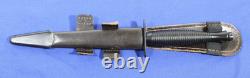
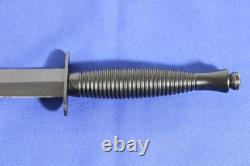
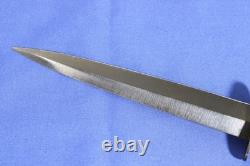
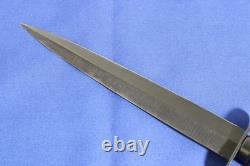
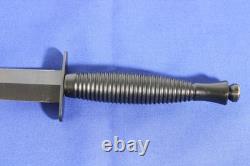
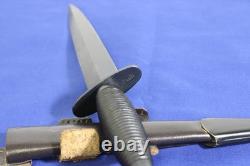
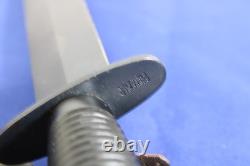
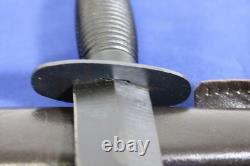
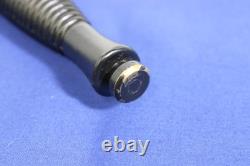
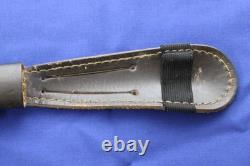
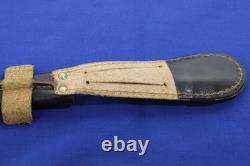
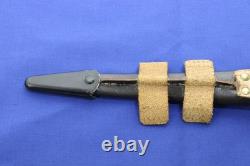
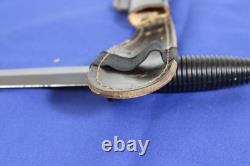
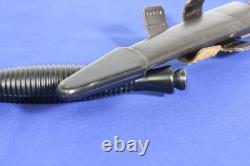
Vintage Post-War "Fairbairn-Sykes (F-S)" Fixed Blade Dagger. Stamped "Sheffield England", No Other Markings. The NATO Sheffield England Fairbairn-Sykes (F-S) Black Fixed Blade Knife Dagger. Is a post-WWII reproduction (third-pattern) of the iconic British commando dagger, still produced in Sheffield, England-the traditional home of British cutlery and many original wartime manufacturers.
(also called the commando dagger) was designed in 1941 by William Ewart Fairbairn and Eric Anthony Sykes. These two Shanghai policemen drew from their experiences in close-quarters combat to create a purpose-built fighting knife for British Commandos, SAS, Airborne Forces, and other special units during WWII.
It saw extensive use in WWII (notably D-Day) and has remained in limited service since, including with NATO forces in the post-war era. The design prioritizes stabbing and thrusting over slashing, with a slender, double-edged blade for penetrating clothing and reaching vital organs. Key Features of the Black NATO Sheffield Version. 17.5-18 cm) long, double-edged dagger style, often made of carbon steel with a black finish for corrosion resistance and low-visibility ("sterile") military use.It has a tapered point and ricasso (unsharpened section near the guard). Black metal alloy (cast, with a ringed or grooved grip for the third pattern). This was a cost-saving/production-friendly change from earlier brass grips. S-curved or straight, often with markings like "Sheffield England, " maker's name, NATO stock numbers, or dates e.
Roughly 7-9.5 oz (knife + sheath). (1950s onward, including the 1970s). Common post-war commercial/military export mark. Wartime (1940s) knives more often have just "ENGLAND" for U. Import requirements or maker-specific stamps with broad arrow (British military acceptance) marks. The fuller "Sheffield England" stamp strongly points to later production by Sheffield firms continuing the pattern for commercial sale, surplus, or NATO contracts. Could be from the 1970s. (or 1960s-1980s), but can't confirm the exact decade with this marking alone. Many undated black NATO-style examples from this period carry only this stamp (or are fully sterile with no maker name). NOTE: Many items are often difficult to identify and determine specifications of the item. We combine many years of experience as a licensed FFL dealer + AI and other sources to identify and describe these items. If you see a mistake in a listing, please let us know so we can fix it. See Store Information in Store Pic. If you want feedback, please leave feedback.